











Patients can participate in medical research as active partners. Researchers should consider their needs and their unique expertise in the research process, as it is a valuable resource. The Health Research Forum published a statement on patient participation and calls for it to become the standard for patient-centered health research.
In the Health Research Forum, 20 experts and patient representatives developed a roadmap to strengthen and further establish patient-oriented health research in Germany. The Forum has now published a statement on the results of this discourse, on which the German Centers for Health Research (DZG) also collaborated. The paper discusses the goals of active patient participation and the opportunities it offers for medical research. It focuses on the partnership between researchers and patients and shows how this can be strengthened. The goal is to jointly shape health research in such a way that it benefits from the individual experiences of patients. The exchange with patients can help to align research with their needs. In addition, patients can use their personal experience to support the transfer of results into practice and increase the transparency and acceptance of research in society. The Health Research Forum calls for the participation of patients in the research process to be established as a standard.
Patient participation requires cultural change
Research funders and patient associations increasingly demand active participation of patients. In Germany, patient participation is already common practice in some research areas, while others have only begun to develop and implement participation options in recent years. For patient participation to succeed, it requires a change in culture among all stakeholders as well as structural changes at many levels. The current paper of the Forum for Health Research specifically identifies these, such as strengthening the competencies of researchers and patients for participation formats, integrating patient participation continuously and in the long term into the research process, and providing sufficient financial and human resources.
Measures of the DZG
To better involve patients in the research process in Germany, the German Centers for Health Research will implement the following measures:
DZG provide online information on patient participation
The DZG website now provides detailed information and background information on the topic of patient participation (in German). Researchers and patients provide insights into their experiences and how they and science benefit from cooperation. In addition, interested parties can find information on how they can participate in research at the DZG.
Further information
About the Health Research Forum
The Health Research Forum intends to facilitate cross-organizational coordination between the players in biomedical research in Germany, so that patients can benefit more quickly from new research results in the future. The Forum is made up of the top representatives of the German research organizations in the field of health research and the health care industry, including the German Centers for Health Research. The Health Research Forum (in German) was established in 2015 on the initiative of the German Federal Ministry of Education and Research.
About the German Centers for Health Research
The six German Centers for Health Research (DZG) to date were initiated by the BMBF to better understand, treat and prevent common diseases such as cancer, diabetes, lung diseases, cardiovascular diseases, neurodegenerative diseases, and infectious diseases. Within the DZG, basic researchers and clinicians collaborate to bring scientific results to patients more quickly.
Throughout Germany, 90 research institutions (universities, university hospitals, and non-university research institutions) participate in the DZG. Some DZGs are also connected with other external partner institutions.
The DZG are funded 90 percent by the federal government and 10 percent by those federal states where their member institutions are located.
This is what ideal medicine would look like: Doctors could specifically alter molecular processes in diseased cells in the body and thus causally cure patients. This is the goal of the German Centers for Health Research (DZG) in the project "Cell type specific targeting for future in vivo delivery in cell and gene therapy." The funding, awarded for the first time, comes from the DZG Innovation Fund.
Although molecular genetic processes are increasingly well understood, altering individual cells or tissues in the body remains difficult. "Research on this is fragmented across disciplines," says project coordinator Prof. Tobias Feuchtinger of the German Center for Infection Research (DZIF). "Some focus on remodeling processes after a heart attack, while oncologists look at the processes around tumors. With the cross-DZG project, we want to overcome these professional boundaries." He said that all centers face the challenge of bringing molecular healing mechanisms in vivo to the tissue and site of the disease. And if, for example, a research team develops a strategy to introduce nanoparticles specifically into liver cells, the principle could be transferred to other tissues as well, the oncologist said.
Improving targeting accuracy
Today, there is little distinction between gene therapy and cell therapy because current cell therapies almost always involve genetic alterations. However, both approaches still need to be more specific. For example, the viruses used as vehicles in gene therapy modify the target tissues and many other cells. This leads to a loss of efficacy and higher costs and may also be associated with the risk of undesirable side effects. By now, viral vectors are safer, but the residual risk remains because the introduced genes are not subject to natural gene regulation. It controls whether a gene is active or not. Likewise, it must be ensured that the introduced genes are not lost in subsequent cell divisions.
In cell therapy, cells are removed from the body, modified in the laboratory, and then re-infused or transplanted into the patient. Here, too, researchers face the complicated task of getting the therapeutic cells to the right place in the body. They must also ensure that the cells survive the time outside the body as well as the transfer and function in situ. The immune system will reject cells if they are not from the recipient. Immunosuppressive drugs counteract this, but they also bring disadvantages. All in all, it would be safer to make the targeted change directly in the body. Suitable tools that work very well in the laboratory already exist. For example, the gene scissors CRISPR/Cas9 that can not only cut out genes, but also replace them in a targeted manner.
"Hit and run" process requires new vectors
"Especially the new possibilities of genome editing with the gene scissors CRISPR/Cas make it urgently necessary to develop novel gene transfer vectors," says DZIF project coordinator Prof. Boris Fehse from the University Medical Center Hamburg-Eppendorf. In "classical" gene therapy, a therapeutic gene is introduced into the target cells to replace a missing or defective gene. It should be active there for as long as possible to maintain the therapeutic effect. The CRISPR/Cas gene scissors are different: they only need to be active in the cell for a short time to correct a defective gene or switch off a disease-causing one. "CRISPR/Cas corrects the defect in a hit-and-run process, then the gene is functional again," Fehse said. "Longer-term expression of the gene scissors would be counterproductive because the risk of incorrect cuts would increase significantly. It also makes it more likely that the immune system will be activated, since CRISPR/Cas originates from bacteria. So, we need new hit-and-run vectors."
Project teams:
Scientific contact:
Professor Tobias Feuchtinger, Ludwig-Maximilians-Universität München, tobias.feuchtinger@med.uni-muenchen.de
Professor Boris Fehse, University Medical Center Hamburg-Eppendorf, fehse@uke.de
120 early career scientists working in clinical and basic research discussed with experts about single cell technologies and their application during the online event on 10-11th November 2022.
Single-cell analyses are currently revolutionizing basic science and promise numerous new approaches for the development of novel therapeutic approaches to combat widespread common diseases, which are at the heart of the research conducted by the DZG. A plethora of methods employed in single cell analyses allows researchers to generate highly precise data about cell types and developmental states of single cells in healthy and diseased tissues. The interpretation of these data (single-cell omics) generates new insights and understanding of complex biological changes within an individual cell, for instance due to aging processes, adaptation to environmental conditions or as a consequence of diseases. There are multiple technologies for single-cell analyses and more than 1,400 software applications for data analyses.
How to choose the right tool?
The early career scientists discussed about choosing the appropriate tool and many other questions with Prof. Joachim Schultze, expert for swarm learning and artificial intelligence, and Prof. Fabian Theis, expert for modelling cell metabolism by single-cell sequencing. Each DZG was represented by a keynote speaker. Early career scientists of all six DZGs presented different applications of single-cell analysis employed in their current research on common diseases, such as diabetes, cardiovascular and lung diseases, cancer, neurodegenerative conditions, and infectious diseases. It was a feature of the symposium that early career scientists rather than the experts themselves were given the opportunity to chair the talks and subsequent Q&A session.
It was the aim of this symposium to bring together experts and early career scientists from all DZG, working in clinical and/or basic research, to facilitate interdisciplinary discussions about single-cell analysis applications and to learn from each other. In this context the symposium was a success as Dr. Herbert Schiller (scientific coordinator of the event, Helmholtz Munich) summarized after the event: “Cells are the fundamental units of life. Hence, it is essential to look at the single cell for insights into complex biological processes in our bodies and to identify pathological changes that will result in disease. For example, we now know that our lungs require the interaction of more than 50 highly specialized cell types to orchestrate gas exchange successfully. In recent years, single-cell analysis has allowed scientists to establish a kind of `google maps´ of the human body (Human Cell Atlas). In my view, the event succeeded in training early career scientists by bringing together experts that provided excellent examples for applied research in this dynamic field of single-cell genomics.”
Three approaches with a reputation for slowing aging processes have proven largely ineffective. For their study, researchers developed a new method to measure aging, which accounts for the complexity of aging in organisms.
In a new study, researchers have taken a close look at three treatment approaches that have been widely believed to slow the aging process. However, when tested in mice, these treatments proved largely ineffective in their supposed impact on aging. "There is no internal clock of aging that you can regulate with a simple switch - at least not in the form of the treatments studied here," concludes Dr. Dan Ehninger of the DZNE, the initiator of the study. The team has developed a new analytical approach to make influences on aging processes measurable.
The study, the results of which have now been published in the renowned journal Nature Communications, involved researchers from DZNE, Helmholtz Munich and the German Center for Diabetes Research (DZD). "We chose three regulators for our interventions that many experts believe slow down aging," explains Prof. Dr. Martin Hrabě de Angelis, head of the Institute of Experimental Genetics and director of the German Mouse Clinic at Helmholtz Munich, who also drove the project with his team. One of them is intermittent fasting, in which the calories consumed are reduced. Number two targets a central node of cell metabolism (mTOR), which is also the target of the supposed "anti-aging drug" rapamycin. Number three, in turn, interferes with the release of growth hormone. Similar treatments are also used by humans, although their efficacy with regard to aging has not been sufficiently proven.
For the assessment in mice, the scientists developed a new answer to the question of how to measure aging. "Many researchers in recent decades have used lifespan as an indirect measure of aging," explains Dan Ehninger, who is a senior scientist at DZNE. So, for example, how old do mice get - and how can that lifespan be extended? "It is often assumed that if they just live longer, they will also age more slowly. But the problem is that mice, like many other organisms, do not die from general old age, but from very specific diseases," says Ehninger. For example, up to 90 percent of mice die from tumors that form in their bodies at an advanced age. "So, if you were to look at the whole genome for factors that make mice become long-lived, you would like find many genes that suppress tumor development - and not necessarily genes that play a general role in aging."
For their study, the scientists therefore chose an approach that does not emphasize lifespan, but rather focused on a comprehensive investigation of age-related changes in a wide range of bodily functions. "You can think of it as a complete health status survey," says Martin Hrabě de Angelis: "The health check results in a compendium of hundreds of factors covering many areas of physiology" - an exact description of the state of the animal at the moment of examination. That's exactly the approach the researchers applied to the animals subjected to one of the three treatment approaches that supposedly slow aging. Across different life stages, they were analyzed and compared: How much does each parameter typically change at a given stage of life? And, do parameters change more slowly when the mice are given one of the three treatments? This study design makes it possible to determine precisely whether the natural aging process can be slowed, and with it the deterioration of important physiological functions.
The results were unambiguous: Although the researchers were able to identify individual cases in which old mice looked younger than they actually were it was clear that "this effect was not due to slowing down aging, but rather due to age-independent factors," says Dan Ehninger. "The fact that a treatment already has its effect in young mice – prior to the appearance of age-dependent change in health measures – proves that these are compensatory, general health-promoting effects, not a targeting of aging mechanisms."
The DZNE and Helmholtz Diabetes Center teams have now set their sights on the next goal: They want to investigate other treatment approaches that experts believe can slow aging. The researchers' hope: The new research method will provide a more comprehensive picture of possible treatment approaches and their effectiveness.
Original publication:
Kan Xie,…., Martin Hrabě de Angelis & Dan Ehninger et al.: Deep phenotyping and lifetime trajectories reveal limited effects of longevity regulators on the aging process in C57BL/6J mice. Nature Communications volume 13, Article number: 6830 (2022). DOI: https://doi.org/10.1038/s41467-022-34515-y
In women after menopause, the extent of certain brain lesions is larger than in men of the same age. DZNE researchers come to this conclusion based on the assessment of more than 3,400 adults as part of the Bonn Rhineland Study. A team led by neuroscientist Monique Breteler reports on the findings in Neurology, the medical journal of the American Academy of Neurology. The assessed tissue damages are considered potential risk factors for dementia and stroke. The current findings underline the significance of sex-specific medicine.
Especially in older adults, bright spots can be observed on brain images obtained by magnetic resonance imaging (MRI). These spots reflect abnormalities in the so-called white matter, an area of the brain that is composed of nerve fibers and lies below the cerebral cortex in the brain’s interior. In technical jargon, these findings are called “white matter hyperintensities”. “These are signs of tissue damage that have been associated with impaired blood flow, hypertension, stroke and cognitive impairment,” explains neuroscientist Valerie Lohner, first author of the current scientific publication. “These abnormalities in brain tissue are known to become more prevalent with age. Our research now shows differences between men and women. This has been discussed for some time, but the data were inconclusive. We therefore assessed a larger group of people and a wider age range than in previous studies. We found no significant differences between women before menopause and men of the same age. However, this situation changes after menopause. So this refers to those women who have already had their last menstruation. In these, lesions to the brain’s white matter were more extensive than in men of the same age.”
Data from the Rhineland Study
These findings are based on research from the so-called Rhineland Study, a large-scale population survey conducted by DZNE in the Bonn area. Together with colleagues from DZNE, Valerie Lohner evaluated the data of almost 2,000 women and more than 1,400 men. Their ages ranged from 30 to 95 years, and the mean age was about 54 years. In addition to differences between the sexes, the researchers generally registered a greater extent of abnormalities in the brain’s white matter in subjects with hypertension. This is in line with previous studies.
Sex-Specific Medicine
“Our study results show that women in whom menopause has already begun are more susceptible to changes in the cerebral vessels and thus to brain diseases than women before menopause, even those of similar age. Damage to the brain’s white matter does not necessarily lead to dementia or stroke, but it increases the risk of them,” says Prof. Dr. Dr. Monique M. B. Breteler, head of the Rhineland Study and director of Population Health Sciences at DZNE. “Our findings also indicate that specific differences between men and women should be considered when assessing these brain lesions. This underscores the relevance of sex-specific research and therapy.”
Unclear Causes
The causes of these differences between the sexes are unclear. It has long been speculated that the hormone oestrogen may have a protective effect that is lost in old age because the female organism gradually stops producing it with climacteric. However, in their data, the researchers of the Rhineland Study did not find any influence of therapy that compensates for hormone deficiency: post-menopausal women who regularly took hormone supplements were, on average, affected by white matter abnormalities to a similar extent as post-menopausal women who did not take hormones. “It is unclear whether hormonal changes during menopause are a determining factor or whether factors related to the onset of menopause play a role. We will further investigate this topic in the Rhineland Study,” Breteler says.
Joint press release from the National Center for Tumor Diseases (NCT) Heidelberg, the German Cancer Research Center (DKFZ), Heidelberg University Hospital (UKHD), and the German Cancer Consortium (DKTK).
Does COVID-19 vaccination increase the risk of cancer patients undergoing therapy with immune checkpoint inhibitors to suffer a dangerous immune complication known as a "cytokine release syndrome"? A team of Heidelberg physicians and scientists has now shown in a clinical study: Increased serum levels of the characteristic cytokines occur frequently in cancer patients, but clinically relevant cases of the dreaded syndrome were not observed. The result supports the current recommendation to vaccinate cancer patients against COVID-19, even under therapy with immune checkpoint inhibitors.
According to the German Robert Koch Institute, cancer patients are considered a risk group for severe courses of COVID-19 disease. For this reason, many patients consider it particularly important to protect themselves against the viral disease with a vaccination against COVID-19.
But is the Corona vaccination associated with special risks for people with cancer? Today, more and more cancer patients are being treated with a so-called "immune checkpoint inhibitor", often shortened to "immunotherapy". Immune checkpoint inhibitors block signals that cancer uses to slow down the immune system's T cells. The agents release the brakes on the immune system, reactivating the immune response against tumor cells.
"There was concern that immune checkpoint inhibitors could trigger strong, uncontrolled immune responses in vaccinated individuals," says Guy Ungerechts, senior physician in the Department of Medical Oncology at Heidelberg University Hospital and National Center for Tumor Diseases (NCT) in Heidelberg, Germany, and head of the Virotherapy Clinical Cooperation Unit at the German Cancer Research Center (DKFZ) and Heidelberg University Hospital (UKHD). Excessively activated T cells can trigger a dreaded cytokine release syndrome (CRS). This complication, which manifests itself with high fever, falling blood pressure, oxygen deficiency and, in extreme cases, multi-organ failure, can occur when activated immune cells release large quantities of messenger substances called cytokines.
"In order to provide the best possible advice to our patients, we wanted to find out whether CRS actually occurs frequently after corona vaccination when treated with immune checkpoint inhibitors. In addition, we wanted to clarify whether the determination of CRS-associated cytokines in the blood could be an early indication of the development of clinically manifest CRS," explains Thomas Walle, the lead author of the current study, who is a physician at the NCT Heidelberg and conducts research in the department headed by Guy Ungerechts at the DKFZ and in the German Cancer Consortium (DKTK).
In a prospective study, the oncologists at the NCT Heidelberg examined 64 vaccinated and 26 unvaccinated cancer patients undergoing therapy with immune checkpoint inhibitors. The study participants suffered from 23 different types of cancer. From the first vaccine dose to four weeks after the second vaccination, patients were monitored for adverse events. None of the patients experienced clinically relevant CRS. Nevertheless, certain cytokines characteristically associated with CRS were elevated to approximately 1.5 times baseline levels in 40 percent of participants after vaccination.
"Under therapy with immune checkpoint inhibitors, COVID vaccination appears to frequently trigger the release of CRS-associated cytokines but rarely causes symptoms," says Sunanjay Bajaj. "Cytokine measurements alone are therefore unlikely to be useful in assessing the risk of CRS." The first author of the current study conducts research as a medical student in the collaborative unit led by Guy Ungerechts, as well as in the DKTK.
Among the vaccinated patients, physicians also observed improved overall survival, which could not be explained solely by higher COVID-19-related mortality among the unvaccinated. "Of course, our result needs to be validated by a study with a larger number of cases," Guy Ungerechts said. "But for now, our data support the current recommendation to cancer patients on immune checkpoint inhibitor therapy to take advantage of vaccination against COVID-19 to protect against severe courses of viral infection."
Click here to see the original publication.
This year's Award for Clinical Research of the German Society of Pneumology and Respiratory Medicine (DGP) went to a group of three young researchers from two German Centers for Health Research. Maja Reimann and Prof Jan Heyckendorf from the German Center for Infection Research (DZIF) and Dr Sebastian Marwitz from the German Center for Lung Research (DZL) developed an algorithm that can indicate with high accuracy the necessary duration of tuberculosis therapy.
The DGP Prize for Clinical Research, endowed with 10,000 euros, is shared by Maja Reimann and Prof Jan Heyckendorf from the DZIF and DZL scientist Dr Sebastian Marwitz for developing a prediction methodology for tuberculosis therapy. Together with a large international team of scientists and physicians coordinated by the Clinical Tuberculosis Center at DZIF, the three researchers were able to make an important contribution to the future of personalised tuberculosis therapy.
Currently, the World Health Organisation (WHO) recommends a standardised duration of tuberculosis treatment of at least 18 months, which is associated with high costs as well as a high risk of side effects. With their work conducted at the Research Center Borstel–Leibniz Lung Center, the researchers sought to answer the question of how to predict the response to therapy and thus its likely necessary duration.
In a large-scale clinical research project, the team was able to identify 22 genes out of many thousands in blood samples from patients that correlate with response to therapies and indicate whether a patient is likely to be cured. The team validated this newly discovered biomarker—the gene signature—in various cohorts consisting of a total of around 200 patients.
Thanks to their findings, which have been presented in the renowned journal European Respiratory Journal, using a simple blood test in the future might allow to predict the response to and the necessary duration of therapy in individual tuberculosis patients.
Source: Press release of the Airway Research Center North (ARCN)
Obesity, impaired blood glucose metabolism, and high blood pressure increase the risk of dying from COVID-19 in young and middle-aged people to a level mostly observed in people of advanced age. This is shown in a recent study* based on data from the Lean European Open Survey for SARS-CoV-2 Infected Patients (LEOSS**).
Elderly people and men have a particularly high risk of developing severe COVID-19 and dying from it1. This is shown by current statistics. Obesity and elevated blood glucose levels are also considered potential risk factors for severe COVID-19. However, the effect of pre-existing conditions on the course of SARS-CoV-2 infection, particularly in younger people, aged between 18 and 55 years, has not yet been adequately studied. To find out whether obesity, diabetes and elevated blood pressure influence the severity of COVID-19 and increase the associated mortality, researchers of the German Center for Diabetes Research (DZD), the IDM (Institute for Diabetes Research and Metabolic Diseases of Helmholtz Munich at the University of Tübingen), and the German Center for Infection Research (DZIF), among other institutions, analyzed data from a total of 3,163 patients with SARS-COV-2 infection from the European case registry LEOSS.
“The results showed that obesity, impaired blood glucose metabolism and high blood pressure have an additive effect on COVID-19-related mortality – especially in young and middle-aged COVID-19 patients," said Professor Norbert Stefan, first author of the study. Furthermore, patients in this age group with all three pre-existing conditions were found to have a similar increased risk of death, as older people (56-75 years), who were metabolically healthy and not obese.
"It is therefore particularly important to intensify the medical monitoring and therapy of younger COVID-19 patients when obesity or diabetes or elevated blood pressure are present," said last author of the study Professor Andreas Birkenfeld, medical director of Medical Clinic IV at the University of Tübingen, head of the Helmholtz Institute in Tübingen and spokesperson of the DZD. Building on their long-standing expertise about the important role of obesity and impaired metabolism in the development of cardiometabolic diseases, both researchers addressed these risks and strategies to mitigate them already early in the course of the COVID-19 pandemic.2,3
*Current publication:
Stefan N, ... Birkenfeld AL. et al.: Obesity and Impaired Metabolic Health Increase Risk of COVID-19-Related Mortality in Young and Middle-Aged Adults to the Level Observed in Older People: the LEOSS Registry. Frontiers in Medicine (2022); DOI: doi.org/10.3389/fmed.2022.875430
**LEOSS – Lean European Open Survey for SARS-CoV-2 Infected Patients:
On the initiative of the German Society of Infectious Diseases (DGI), a European case registry has been launched in collaboration with the German Center for Infection Research (DZIF) to collect clinical data for patients with SARS-CoV-2 infection. LEOSS is a European non-interventional multicenter cohort study. Launched in March 2020, the registry is characterized by the fact that all data collected will go to the scientific community for shared analysis. Among others, the German Centers for Health Research (DZG) are also involved in the registry. The DZD uses the registry, for example, to investigate the influence of obesity and an impaired metabolism on the severity of COVID-19 disease. https://leoss.net/
Previous publications by the authors on this topic:
(1) Journal of Health Monitoring | S2/2021 | Risikogruppen für schwere COVID-19-Verläufe (rki.de)
(2) LEOSS – Lean European Open Survey for SARS-CoV-2 Infected Patients . Further informationen: https://leoss.net/
(3) Stefan N, Birkenfeld AL, Schulze MB, Ludwig DS. Obesity and impaired metabolic health in patients with COVID-19. Nat Rev Endocrinol. 2020 Jul;16(7):341-342.
Four of six German Centres for Health Research (DZG) celebrated their tenth anniversary today with a ceremony in Berlin and around 300 guests from the worlds of politics and science. Federal Research Minister Bettina Stark-Watzinger, Hessian Science Minister Angela Dorn, Berlin State Secretary of Health Dr Thomas Götz, former Federal Research Minister Annette Schavan, Prof. Christian Drosten and BioNTech Co-Founder and Chief Medical Officer Prof. Özlem Türeci offered their congratulations at the event and digitally.
Federal Research Minister Bettina Stark-Watzinger congratulated the DZGs with a message of greeting on their 10th anniversary: "The German Centres for Health Research have been doing valuable work in the fight against widespread diseases such as cancer for ten years. They bundle research and ensure that new scientific findings on prevention, diagnosis and therapies quickly benefit patients. Basic research and clinical research work closely together as a matter of course. This makes the centres pacesetters in health research."
Around half a million people are diagnosed with cancer every year in Germany. Almost 1.8 million cases of cardiovascular disease have to be treated in hospitals every year. Statistically, one person dies in Germany every four minutes due to lung disease and infectious diseases have shaken Germany, with more than 25 million COVID-19 infections and almost 140,000 deaths to date. With an ageing population and the global mobility and interconnectivity of humankind, the burden of widespread diseases on health systems continues to increase.
For this reason, results from research must reach people quickly. With this mission, the DZG are dedicated to cardiovascular diseases, lung diseases, cancer, infectious diseases, diabetes and neurodegenerative diseases. They were founded on the Federal Ministry of Education and Research (BMBF) initiative to confront widespread diseases. Four of six DZG are celebrating anniversaries this year – the German Cancer Consortium (DKTK), German Centre for Cardiovascular Research (DZHK), German Centre for Lung Research (DZL) and German Centre for Infection Research (DZIF).
Hessian Science Minister Angela Dorn also congratulated the DZG with a message of greeting: "The coronavirus pandemic has shown how important it is to rapidly bring research results into clinical practice and in an interdisciplinary way. This also applies to widespread diseases, which cause huge suffering and have enormous health and economic implications. The DZGs make a decisive contribution to ensuring that results from basic research are translated more quickly into prevention, diagnosis and therapy, therefore benefitting people. Many thanks for this work, and all the best for your anniversary!"
The Berlin State Secretary for Health, Dr Thomas Götz, said at the anniversary event in Berlin: "From the very beginning, the German Centers for Health Research quickly established the trust of the research landscape in the new network model, in the scientific approaches, in the cooperation and their structures. Today we can say that the DZG are excellent research network entities. They have also succeeded in uniting leading minds from respective fields behind the idea of the DZG - also because of the immense translational potential it holds."'
Prof. Dr Werner Seeger, current spokesperson of the German Centers for Health Research and Chairman of the Board DZL, said: "The DZGs start where promising research results still get stuck far too often - between the lab and the patient's bedside. These phases of research are time-consuming, expensive and often marked by setbacks. They do not bring quick scientific fame and are sometimes referred to as the 'valley of death'. In the last ten years, the DZG have been able to build bridges across this valley so that research reaches the people who need it most."
In 2020, the first drug for chronic hepatitis D and a new heart valve technology were approved in Europe. New drugs to treat various forms of pulmonary hypertension and better individualised cancer therapies are also successes in which DZG scientists played a leading role. These examples show how basic and clinical research can be combined to provide patients with improved diagnostic options and therapies.
In the future, the individual centres want to strengthen cooperation, says Seeger. "Our goal is for the DZGs to move together in research to make even better use of synergy potential." A significant step in this direction is the DZG Innovation Fund, a research funding programme supported by all DZGs, which will be announced for the first time in 2022. In addition, the DZGs continue to work intensively on supporting their young scientists in the balancing act between clinic and research and exchanging their research data and biosamples based on common standards.
Prof. Dr Christian Drosten, a scientist at the German Centre for Infection Research, said that the translational gap is a real challenge. Closing this gap costs money and takes patience. He wished for continuity from politics and stressed that communication between science and politics must become a permanent process.
Prof. Dr Özlem Türeci, BioNTech/German Consortium for Translational Cancer Research/HI-TRON, said: "Today's ceremony recognises the achievements of the DZG in improving healthcare in Germany. This commitment has helped to ensure that innovation reaches patients quickly. The better our country sets itself up today through complementary structures to promote translation, i.e. the efficient bridging of research to application, the more robustly we are positioned for the medicine of tomorrow."
Dr. h.c. mult. Annette Schavan, under whose leadership the BMBF initiated the establishment of the six centres between 2009 and 2012, recalled the beginnings and now emphasised: "European alliances are important, especially since the issues surrounding common diseases are comparable in the countries of Europe. The first alliances have been formed. Europe should have the ambition to be the continent with the best support for talent in research."
About the German Centres for Health Research
The six German Centres for Health Research aim to combat widespread diseases effectively. Several thousand basic researchers, clinical researchers and physicians work in Germany's most prominent health research network to bring medical progress to patients quickly. They are looking for ways to improve the prevention, diagnosis and treatment of the major common diseases cancer, dementia, diabetes, infections, and cardiovascular and lung diseases - across research disciplines and organisations. Ninety non-university and university partner institutions in 37 cities are members of the DZG.
The centres were established between 2009 and 2012 on the initiative of the Federal Ministry of Education and Research (BMBF). The federal government and 13 federal states fund the DZGs with around 270 million euros annually. The focus of all DZG is on translating research results into clinical practice.
The six German Centres for Health Research are:
Two more centres for paediatric and adolescent medicine and for mental health are being planned.
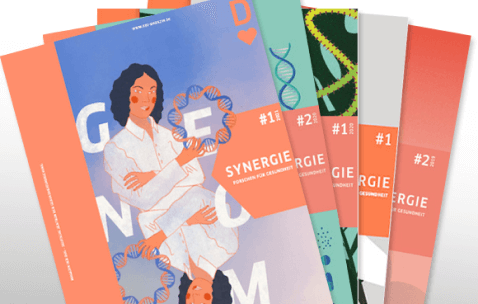
In the current issue of SYNERGIE - Research for Health, the research magazine of the DZG, everything revolves around the body's own defense system. Read about the impressive ways in which the immune system protects us against disease and how it sometimes overreaches in the task.
Scientists at the DZG are harnessing the immune system to fight cancer and keep HIV at bay. They want to use a well-known drug to increase the respiratory system's defenses against corona viruses and better understand what immune processes have to do with vascular diseases. In type 1 diabetes, misdirected immune cells are directed against the patient's own body and are supposed to be brought back into balance. And researchers have deciphered what a mysterious brain disease has to do with the immune system.
SYNERGIE is published twice a year by the six German Centers for Health Research and appears online, as an ePaper and as a printed issue.
Read online now oder subscribe.
You are currently viewing a placeholder content from Google Maps. To access the actual content, click the button below. Please note that doing so will share data with third-party providers.
More InformationYou are currently viewing a placeholder content from OpenStreetMap. To access the actual content, click the button below. Please note that doing so will share data with third-party providers.
More InformationYou are currently viewing a placeholder content from Mapbox. To access the actual content, click the button below. Please note that doing so will share data with third-party providers.
More InformationYou need to load content from hCaptcha to submit the form. Please note that doing so will share data with third-party providers.
More InformationYou need to load content from reCAPTCHA to submit the form. Please note that doing so will share data with third-party providers.
More InformationYou need to load content from reCAPTCHA to submit the form. Please note that doing so will share data with third-party providers.
More InformationYou need to load content from reCAPTCHA to submit the form. Please note that doing so will share data with third-party providers.
More InformationYou need to load content from Turnstile to submit the form. Please note that doing so will share data with third-party providers.
More Information